

Upcoming events.
All Upcoming events.
Please note that many regulatory boards accept AAMFT course attendance to fulfill CE requirements, but do not have a pre-approval process. If in doubt, check with the board.
Event Type
Internal Affairs Committee Meeting (Copy)
Help us organize our network!
Email contact@rmftn.com if you would like to join us.
Events Planning Committee Meeting (Copy)
Help us plan our next in person or virtual event.
Email contact@rmftn.com if you would like to join us.
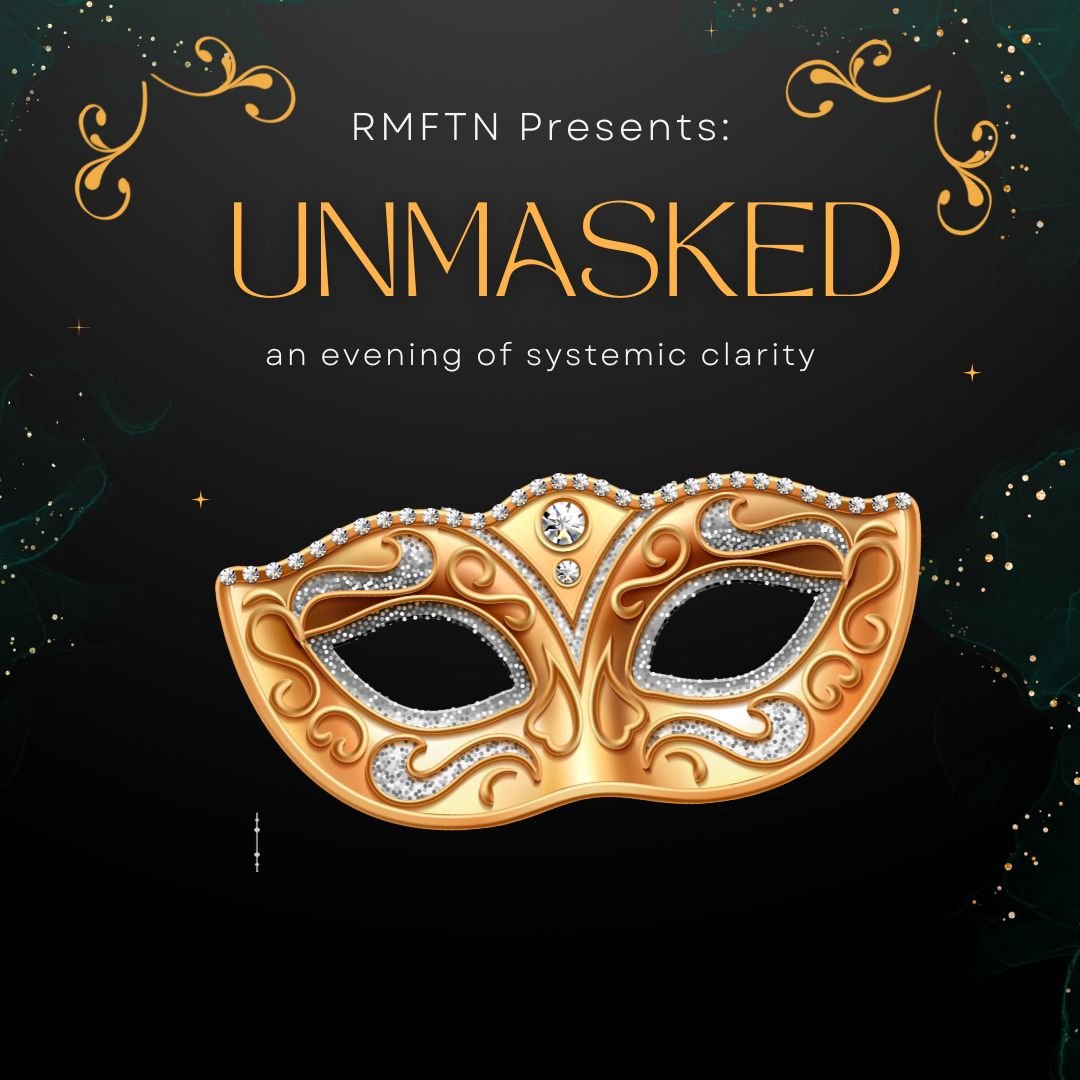
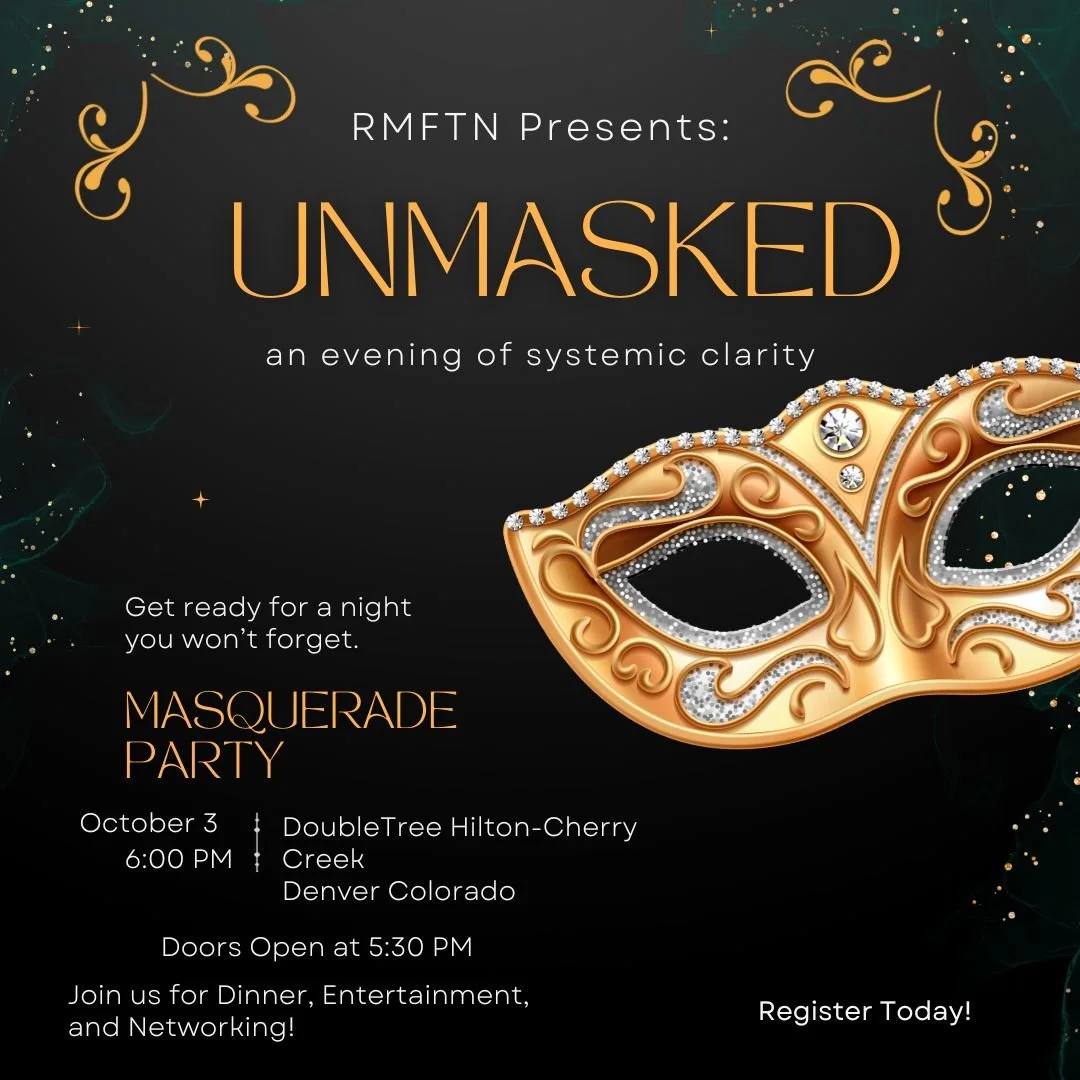
Masquerade Party
Join us
Join us for Unmasked, an awesome in-person event where we'll dive deep into the world of systemic clarity. Featuring guest speaker, Dr. Reo Leslie . This event is an opportunity to connect face-to-face with like-minded folks. Don't miss out on an evening full of aha moments and real talk!
Register Today

October 2026 Meet & Greet
Every 2nd Friday of the month, we host a 50-minute, virtual meet-up, designed to provide opportunities for support, connection, and conversation. Some months we'll have a theme, and others will be open-ended to provide room for any field-related discussions or case consultations.
November 2026 Meet & Greet
Every 2nd Friday of the month, we host a 50-minute, virtual meet-up, designed to provide opportunities for support, connection, and conversation. Some months we'll have a theme, and others will be open-ended to provide room for any field-related discussions or case consultations.
December 2026 Meet & Greet
Every 2nd Friday of the month, we host a 50-minute, virtual meet-up, designed to provide opportunities for support, connection, and conversation. Some months we'll have a theme, and others will be open-ended to provide room for any field-related discussions or case consultations.
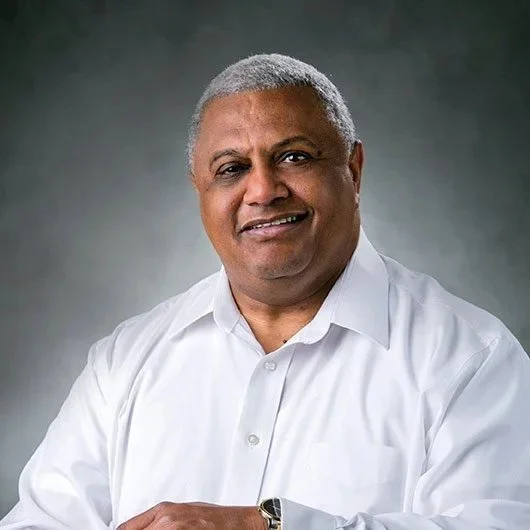
September 2026 Train & Gain: DORA Do’s and Don’ts: What to do if you receive a DORA complaint
The Queer Adjusted Systemic Lens (QASL) introduces an innovative model of family therapy that centers queerness without marginalizing other members of the system. This presentation examines the clinical and cultural need for the model, outlines its theoretical foundations, and offers a clear, accessible set of interventions for practical use. Participants will also participate in an experiential exercise that demonstrates the difference between the therapy uninformed by the QASL and therapy informed by the QASL.
Events Planning Committee Meeting (Copy)
Help us plan our next in person or virtual event.
Email contact@rmftn.com if you would like to join us.
September 2026 Meet & Greet
Every 2nd Friday of the month, we host a 50-minute, virtual meet-up, designed to provide opportunities for support, connection, and conversation. Some months we'll have a theme, and others will be open-ended to provide room for any field-related discussions or case consultations.
Agenda Planning Meeting (Copy)
Help us plan our next in person or virtual event.
Email contact@rmftn.com if you would like to join us.
Events Planning Committee Meeting (Copy)
Help us plan our next in person or virtual event.
Email contact@rmftn.com if you would like to join us.
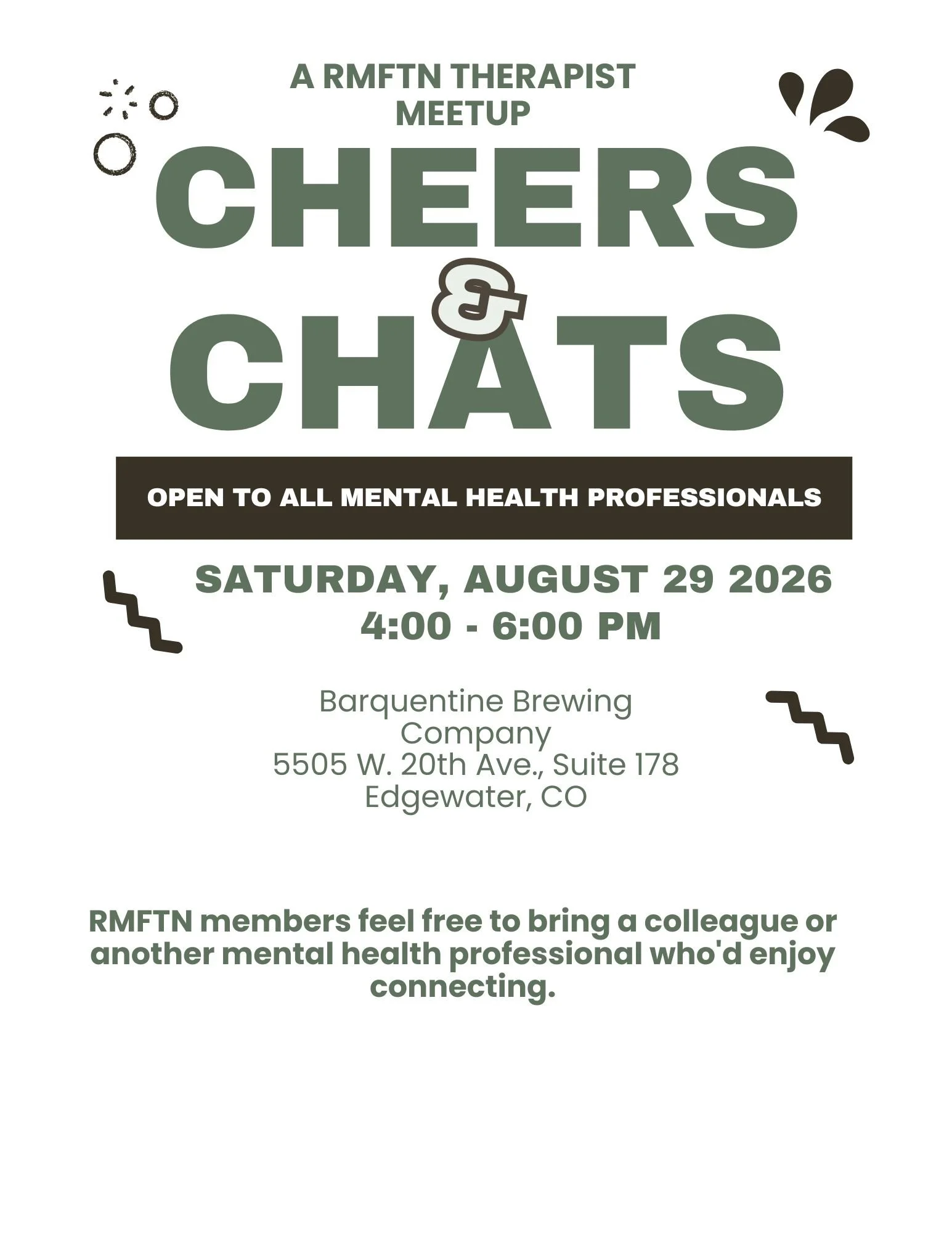
Events Planning Committee Meeting
Help us plan our next in person or virtual event.
Email contact@rmftn.com if you would like to join us.
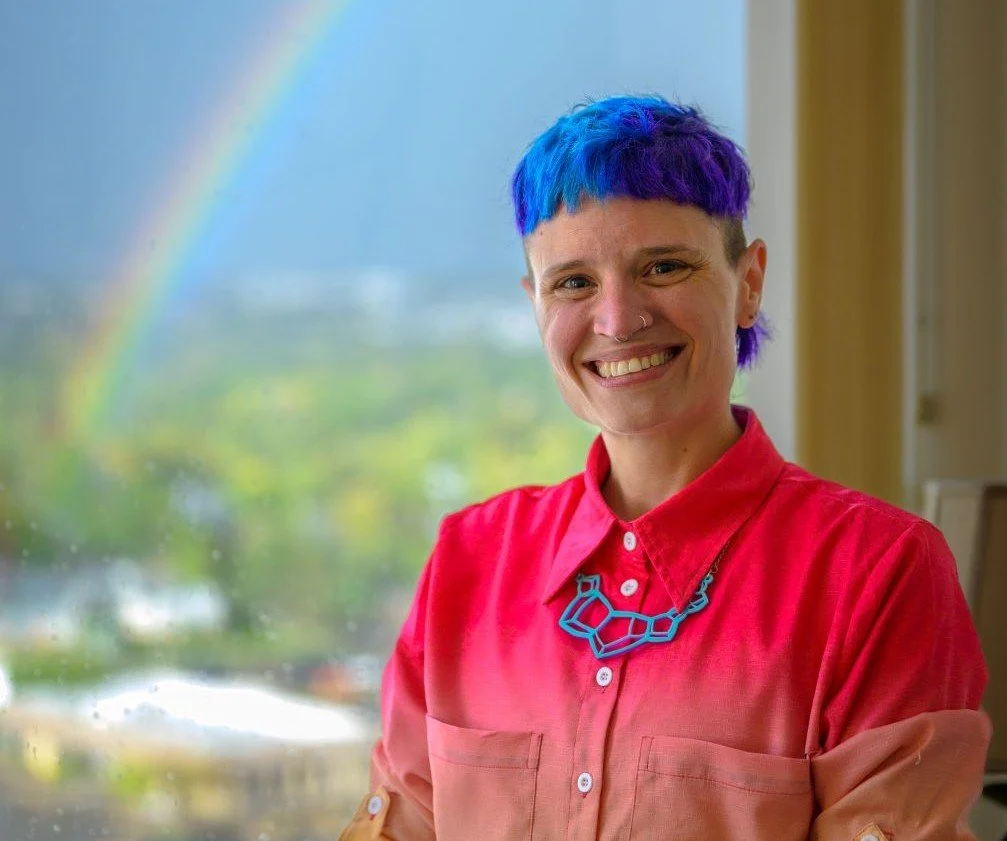
August 2026 Train & Gain: The Queer Adjusted Systemic Lens: Affirming Queerness in Relational Work
The Queer Adjusted Systemic Lens (QASL) introduces an innovative model of family therapy that centers queerness without marginalizing other members of the system. This presentation examines the clinical and cultural need for the model, outlines its theoretical foundations, and offers a clear, accessible set of interventions for practical use. Participants will also participate in an experiential exercise that demonstrates the difference between the therapy uninformed by the QASL and therapy informed by the QASL.
August 2026 Meet & Greet
Every 2nd Friday of the month, we host a 50-minute, virtual meet-up, designed to provide opportunities for support, connection, and conversation. Some months we'll have a theme, and others will be open-ended to provide room for any field-related discussions or case consultations.
Events Planning Committee Meeting
Help us plan our next in person or virtual event.
Email contact@rmftn.com if you would like to join us.
Agenda Planning Meeting
Help us plan our next in person or virtual event.
Email contact@rmftn.com if you would like to join us.
Events Planning Committee Meeting (Copy)
Help us plan our next in person or virtual event.
Email contact@rmftn.com if you would like to join us.
Internal Affairs Committee Meeting
Help us organize our network!
Email contact@rmftn.com if you would like to join us.
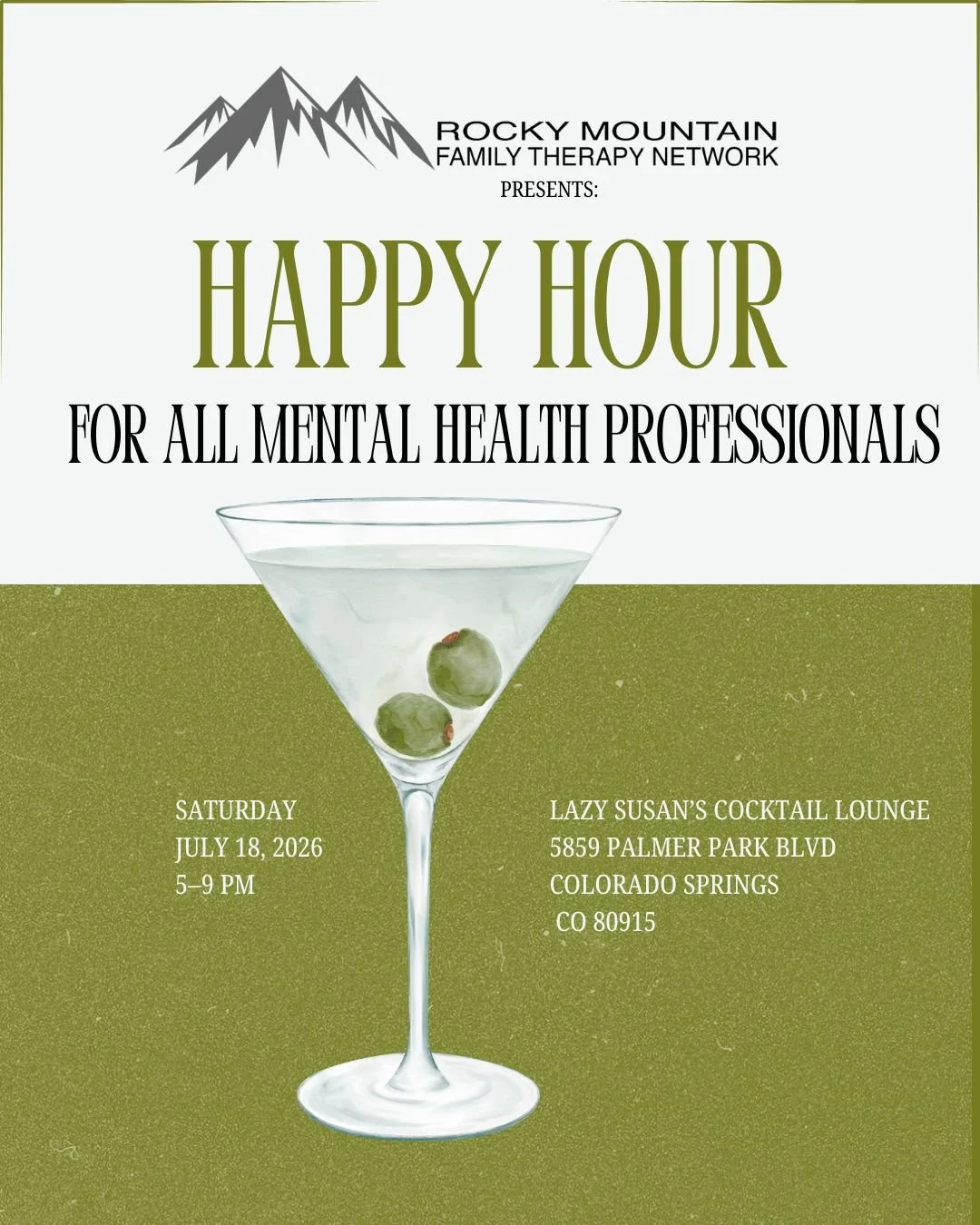
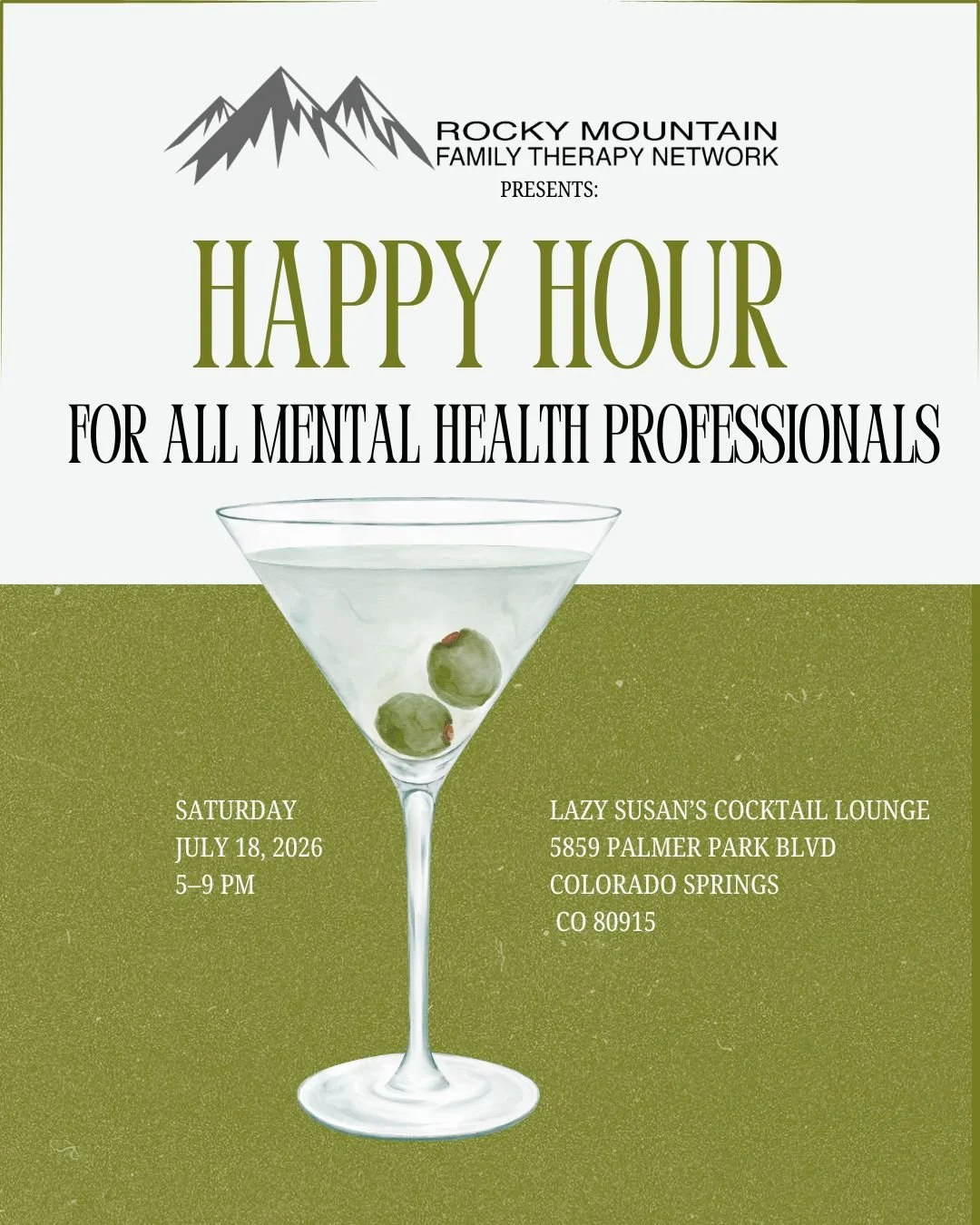
Colorado Springs
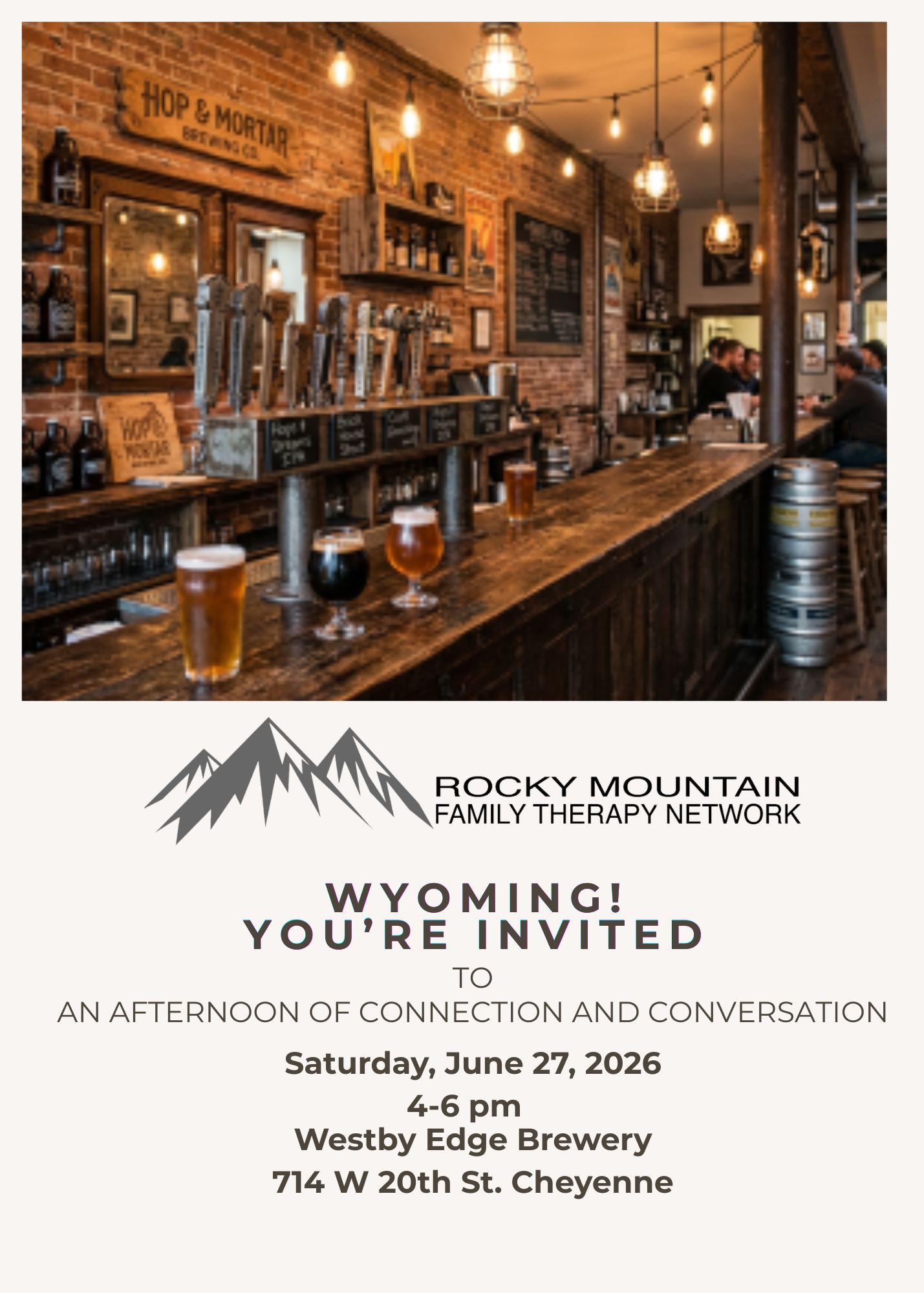
YOU’RE INVITED!
No Registration Required.
All Mental Health Professional Welcome!
July 2026 Train and Gain: No Scars: Assessing for Non-Physical Forms of Domestic Violence in Couples Therapy
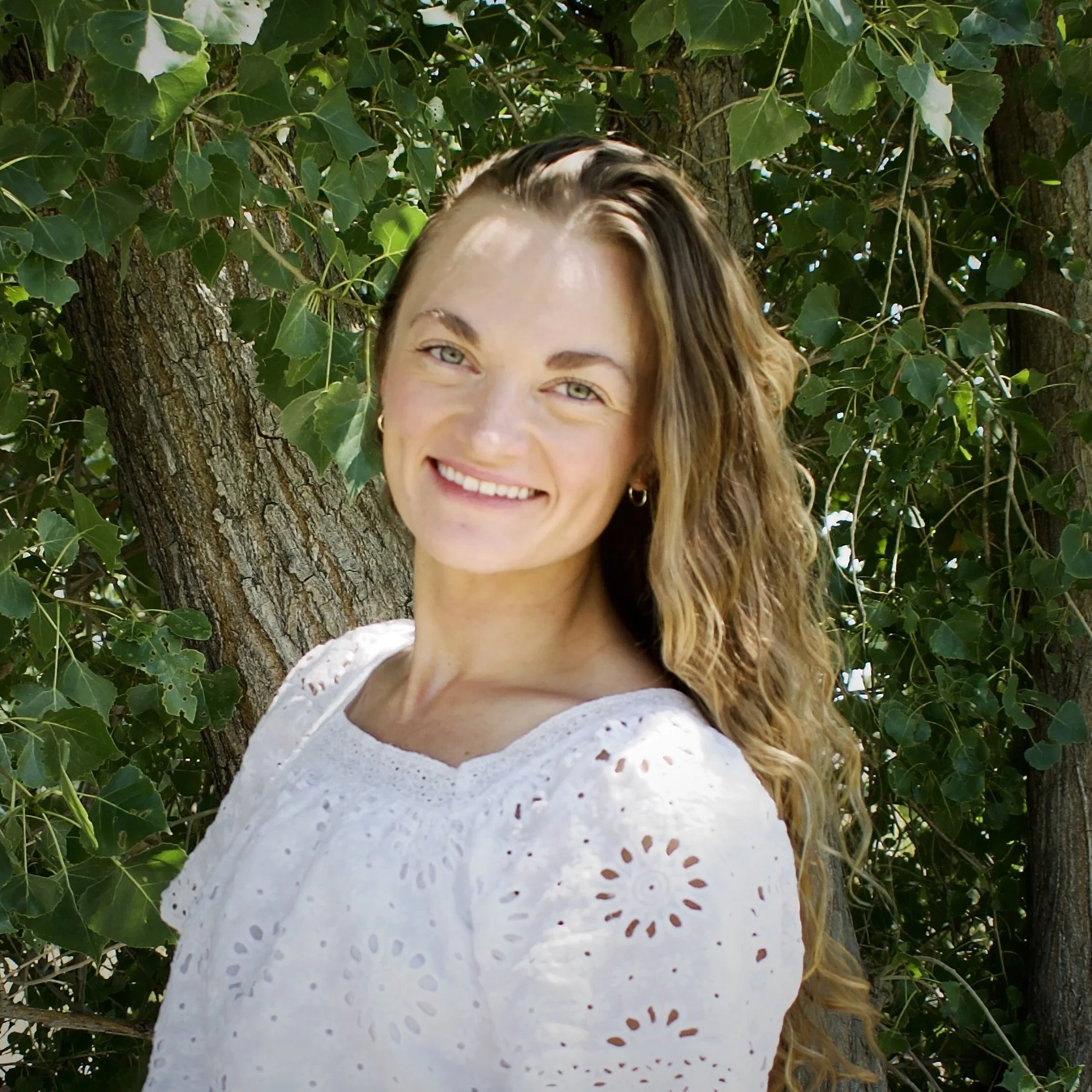
Frances Russell, M.S., LMFT, RYT-200, is a highly experienced Licensed Marriage and Family Therapist with over 2,200 hours of direct clinical experience focusing on individuals, couples, and families. Currently practicing at Lumen Therapy Services, she specializes in systemic and culturally attuned therapy, incorporating evidence-based modalities such as Emotionally Focused Therapy (EFT), Gottman Method (Levels I and II), and Eye Movement Desensitization and Reprocessing (EMDR).
Her professional background includes significant contributions to clinical leadership and academia:
Clinical Expertise: She has extensive experience in trauma-informed care, having served as a Second Lead Trauma Assessor and a Family Therapy Instructor for youth in the juvenile justice system.
Administrative Leadership: Frances has held key roles such as Assistant to the Center Director at the CSU Center for Family and Couple Therapy, where she developed telehealth policies and managed therapist training programs.
Research and Publication: A published researcher, her work focuses on Emotional Availability (EA) in parent-child relationships, with recent contributions to the Journal of Child and Family Studies and Children.
Education and Certification: She holds a Master’s degree in Human Development and Family Studies from Colorado State University and a Bachelor’s degree from the University of Virginia. Additionally, she is a Registered 200-hour Trauma-Informed Yoga Teacher and is certified in the Collaborative Assessment and Management of Suicidality (CAMS).
Train and Gain Details
“He’s gaslighting me!” “They show up totally different in here than at home.” “I fear if I share this, she’ll manipulate me with it later.” Have you heard a couple say these things? Most couples therapists know that abuse is a contraindication for couples therapy. And when we hear that partners are hitting one another, it’s a big red flag. But for many of us, it’s hard to discern the difference between high escalation, a heated conflict or a partner speaking from fear… and a pattern of abuse, especially when there isn’t any physical evidence. This Train and Gain will equip LMFTs to better assess emotional and psychological abuse patterns, document clinical notes that protect both themselves and clients in these cases and gain guidance for how to move forward if this presents in couples work.
Learning Objectives:
1. Improve assessment for ongoing, non-physical abuse in couples therapy to prevent harm earlier in the process
2. Increase understanding complexities of releasing records, if requested, to inform note-taking on these cases
3. Gain specific guidance for what to do next if this presents (or is currently presenting) in your couples work
Please note that many regulatory boards accept AAMFT course attendance to fulfill CE requirements, but do not have a pre-approval process. If in doubt, check with the board.
Events Planning Committee Meeting
Help us plan our next in person or virtual event.
Email contact@rmftn.com if you would like to join us.
July 2026 Meet & Greet
Every 2nd Friday of the month, we host a 50-minute, virtual meet-up, designed to provide opportunities for support, connection, and conversation. Some months we'll have a theme, and others will be open-ended to provide room for any field-related discussions or case consultations.
Agenda Planning Meeting
Help us plan our next in person or virtual event.
Email contact@rmftn.com if you would like to join us.
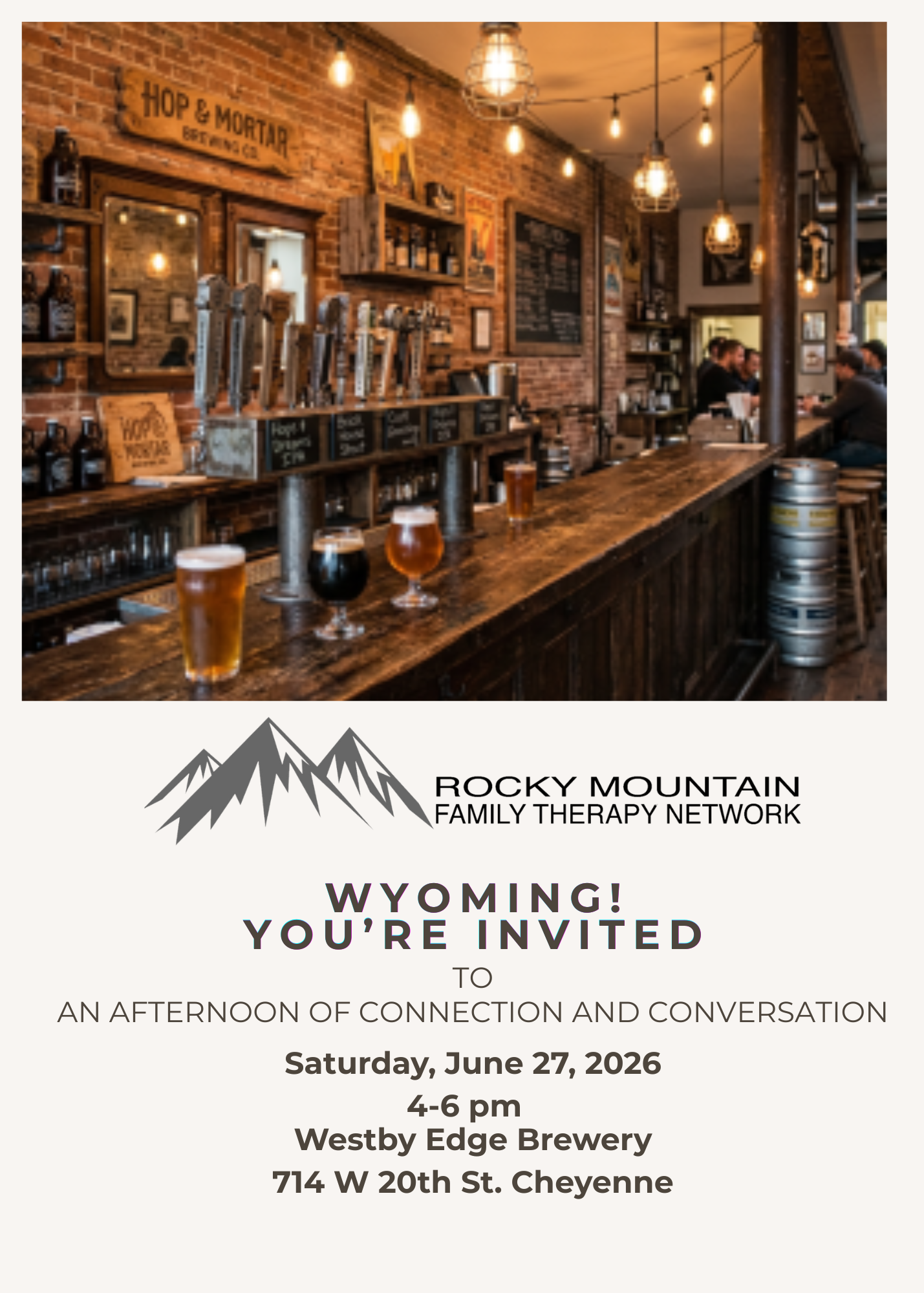
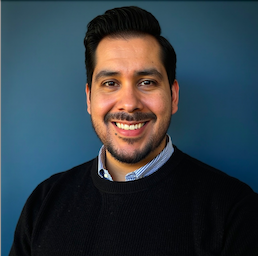
Intersectional Queer History and the Evolution of Pathology: Implications for MFT Practice
Eduardo Viezca, PhD, LCSW is a therapist, educator, and scholar whose work integrates depth psychology, decolonial studies, and culturally responsive mental health care. He serves as an affiliate and instructor at the Denver Family Institute and as an adjunct professor at Pacifica Graduate Institute, where he teaches graduate-level courses on Jungian psychology, decoloniality, and systemic therapy. His research and writing focus on liberatory approaches to psychotherapy, including Jotería psychologies and arts-based, participatory methods, and he regularly presents on identity, culture, and healing in academic and clinical spaces.
Dr. Viezca specializes in working with queer, trans, neurodivergent, and BIPOC individuals, couples, and families. His approach is relational, trauma-informed, and culturally affirming, integrating somatic, creative, and community-based practices to support meaningful change. A bilingual (Spanish-English) clinician, he is committed to creating spaces where clients can explore identity, relationships, and personal transformation in ways that honor their lived experiences.
This Train & Gain offers a historical overview of the past 200 years of American mental health discourse, focusing on how ideas about gender, sexuality, race, and childhood behavior have been constructed and challenged over time. Participants will explore how social, cultural, and political forces have shaped dominant understandings of normality and pathology. We will examine key moments in which these shifting perceptions influenced clinical frameworks, including revisions to the DSM over time. The role of social movements in challenging pathologizing narratives and advancing more inclusive understandings of human development and identity will also be explored. By placing systemic family therapy within this broader historical context, participants will be able to deepen their ability to think intersectionally and link social movements with clinical practice.
Learning Objectives:
1. Identify key historical moments that shaped U.S. mental health discourse related to gender, sexuality, race, and childhood behavior.
2. Describe how social movements influenced changes in psychiatric diagnosis, including shifts in the DSM related to sexuality.
3. Apply historical insight to deepen intersectional awareness in contemporary marriage and family therapy practice.
Please note that many regulatory boards accept AAMFT course attendance to fulfill CE requirements, but do not have a pre-approval process. If in doubt, check with the board.
June 2026 Meet & Greet
Every 2nd Friday of the month, we host a 50-minute, virtual meet-up, designed to provide opportunities for support, connection, and conversation. Some months we'll have a theme, and others will be open-ended to provide room for any field-related discussions or case consultations.

When Talking Isn't Enough: An Introduction to Somatic & Movement-Based Couples Therapy
Amanda Jepson (she/her) is a total sex nerd, personally and professionally. She is a Licensed Professional Counselor, Approved Clinical Supervisor, AASECT-Certified Sex Therapist and Sex Therapy Supervisor, and Board-Certified Sexologist with nearly 15 years of experience working with veterans, active duty service members, and first responders navigating trauma, sexual assault, abuse, and vicarious trauma. She also specializes in sexuality, consensual nonmonogamy, and kink through an inclusive, intersectional lens. She is passionate about empowering her clients as they reclaim their whole selves, providing consultation to both seasoned and new providers, and being a sex-positive provocateur in clinical and educational spaces.
This presentation explores the foundations of sex therapy and sex-positive clinical practice when working with individuals and relationships. Participants will examine how personal bias, cultural narratives, and clinical training impact conversations about desire, pleasure, consent, and relational structure. The session will offer practical tools for supporting couples and partners navigating communication challenges, sexual concerns, consensual nonmonogamy, and kink. Emphasis will be placed on inclusive, intersectional care that centers autonomy, curiosity, and relational integrity. Attendees will leave with concrete strategies to create safer, more affirming therapeutic spaces for diverse relational and sexual experiences.
1) Define key principles of sex-positive therapy and their application in clinical practice.
2) Identify personal and cultural biases that may impact work with sexuality and relationships.
3) Demonstrate at least three clinical strategies for addressing desire discrepancies, communication challenges, and sexual concerns in relational therapy.
4) Apply inclusive, intersectional frameworks to support diverse sexual and relational identities in therapy.
May 2026 Meet & Greet
Every 2nd Friday of the month, we host a 50-minute, virtual meet-up, designed to provide opportunities for support, connection, and conversation. Some months we'll have a theme, and others will be open-ended to provide room for any field-related discussions or case consultations.
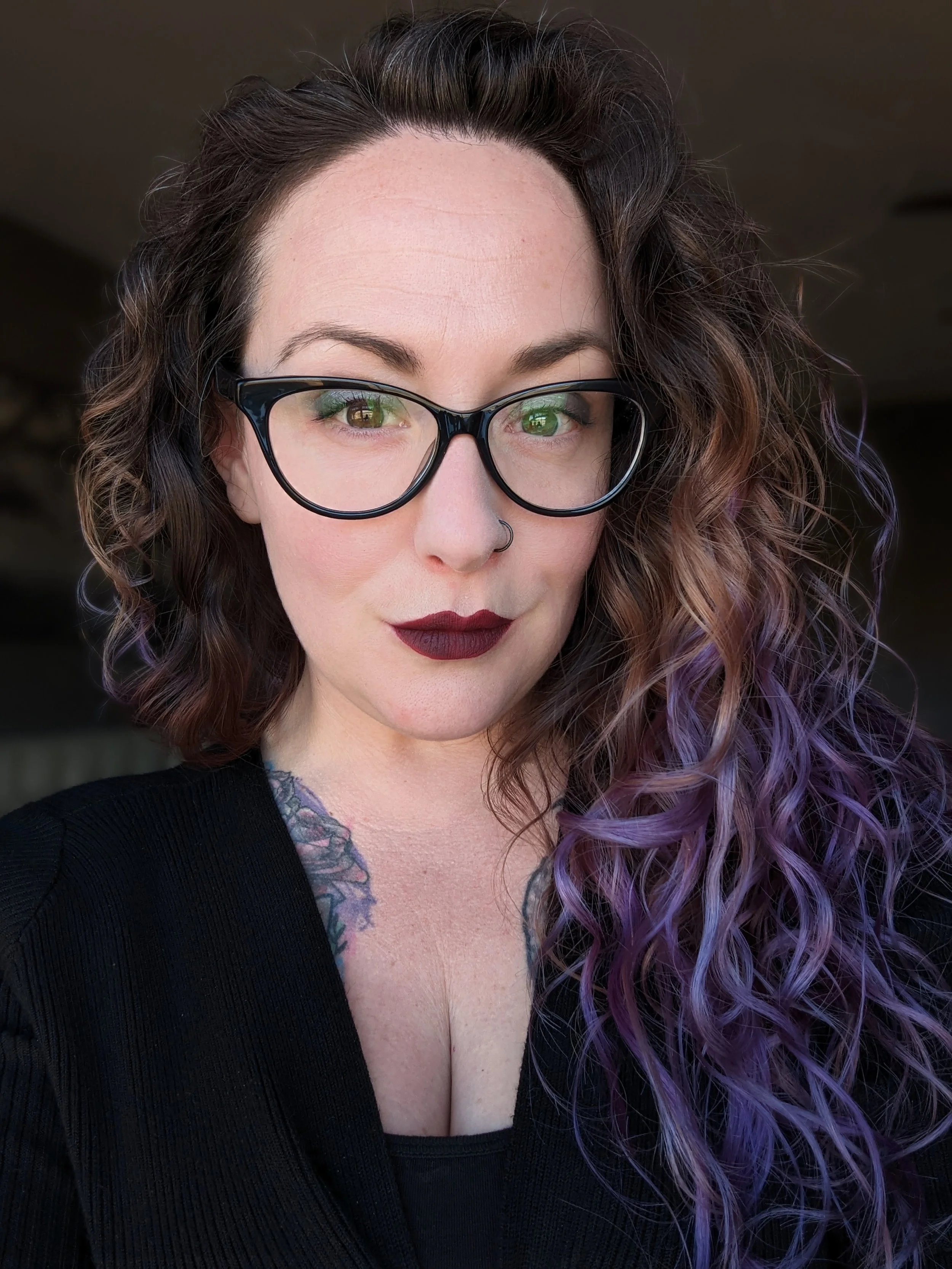
April Train & Gain "Sex Positive Therapy”
Amanda Jepson (she/her) is a total sex nerd, personally and professionally. She is a Licensed Professional Counselor, Approved Clinical Supervisor, AASECT-Certified Sex Therapist and Sex Therapy Supervisor, and Board-Certified Sexologist with nearly 15 years of experience working with veterans, active duty service members, and first responders navigating trauma, sexual assault, abuse, and vicarious trauma. She also specializes in sexuality, consensual nonmonogamy, and kink through an inclusive, intersectional lens. She is passionate about empowering her clients as they reclaim their whole selves, providing consultation to both seasoned and new providers, and being a sex-positive provocateur in clinical and educational spaces.
This presentation explores the foundations of sex therapy and sex-positive clinical practice when working with individuals and relationships. Participants will examine how personal bias, cultural narratives, and clinical training impact conversations about desire, pleasure, consent, and relational structure. The session will offer practical tools for supporting couples and partners navigating communication challenges, sexual concerns, consensual nonmonogamy, and kink. Emphasis will be placed on inclusive, intersectional care that centers autonomy, curiosity, and relational integrity. Attendees will leave with concrete strategies to create safer, more affirming therapeutic spaces for diverse relational and sexual experiences.
1) Define key principles of sex-positive therapy and their application in clinical practice.
2) Identify personal and cultural biases that may impact work with sexuality and relationships.
3) Demonstrate at least three clinical strategies for addressing desire discrepancies, communication challenges, and sexual concerns in relational therapy.
4) Apply inclusive, intersectional frameworks to support diverse sexual and relational identities in therapy.
April 2026 Meet & Greet
Every 2nd Friday of the month, we host a 50-minute, virtual meet-up, designed to provide opportunities for support, connection, and conversation. Some months we'll have a theme, and others will be open-ended to provide room for any field-related discussions or case consultations.
March Train & Gain "Transformation: A clinician's guide to best practice and the evolution of gender-affirming care"
Previous research has consistently found that transgender and gender-diverse (TGD) individuals experience negative mental health outcomes in far higher numbers than their cisgender peers. A recent secondary data analysis from the Transgender Population Study found that the majority of TGD individuals (81.3%) have considered suicide at least once in their lifetime. Additionally, they were found to utilize behavioral health treatment at significantly higher rates. Despite this, the majority of behavioral health clinicians report feeling unprepared and under-educated to work with gender-diverse youth.
This training will provide clinicians with the necessary tools to deliver competent and ethical treatment to TGD youth and their families. In addition to exploring the provision of psychotherapy, this course will also identify the various treatments available to TGD individuals and the requirements for accessing care. Lastly, clinicians will learn how to write a comprehensive letter of support for TGD individuals wishing to access gender-affirming medical interventions.
Learning Objectives
Understand and accurately use key terms related to gender identity, as well as identify common misconceptions and outdated language.
Describe the therapist’s role in providing support and guidance to transgender and gender-diverse (TGD) individuals and their families.
Outline the various medical transition options available to TGD individuals, including hormone therapy and gender-affirming surgeries.
Understand the purpose and importance of letters of support for transgender individuals seeking medical transition services, and learn how to write a clear and concise letter that meets the requirements of healthcare providers and insurance companies.
Please note that many regulatory boards accept AAMFT course attendance to fulfill CE requirements, but do not have a pre-approval process. If in doubt, check with the board.
March 2026 Meet & Greet
Every 2nd Friday of the month, we host a 50-minute, virtual meet-up, designed to provide opportunities for support, connection, and conversation. Some months we'll have a theme, and others will be open-ended to provide room for any field-related discussions or case consultations.

February Train & Gain "Adult ADHD Through a Neurodiversity Affirming Lens: What Therapists Need to Know"

Dr. Priyanka Rao is a Licensed Psychologist and the founder of Asha Mental Health, a neurodiversity affirming therapy and assessment practice in Minneapolis. She specializes in working with late-diagnosed ADHD and autistic adults, with a clinical emphasis on trauma, identity development, and the lifelong impact of masking and chronic self-blame. Dr. Rao is known for her strengths-based, culturally responsive approach that helps clients rewrite internalized narratives and develop sustainable, shame-free systems that reflect how their brains work. In addition to her clinical practice, she leads Asha Coaching & Consulting, where she supports ADHD professionals and entrepreneurs in building executive function skills and creating work lives aligned with their neurodivergent wiring. Dr. Rao brings both lived experience and deep clinical expertise to her work, making her a trusted voice in adult ADHD, neurodiversity, and compassionate behavior change.
Adult ADHD is often misunderstood in clinical practice, leading many clients to be overlooked, misdiagnosed, or unsupported until well into adulthood. This presentation reframes ADHD through a neurodiversity affirming lens and equips therapists with evidence-informed strategies to recognize diverse presentations and support clients before and after diagnosis. We will address the shame, trauma, and identity shifts common among late-diagnosed adults and demonstrate how targeted psychoeducation can dramatically improve insight and functioning. Attendees will leave with concrete tools they can implement immediately in therapy, including energy mapping, interest-based planning, externalized executive function supports, and flexible habit-building strategies.
Learning Objectives
1. Describe key principles of a neurodiversity affirming approach to adult ADHD and differentiate this framework from deficit-based models.
2. Identify common but underrecognized ADHD presentations in adults, particularly among women, BIPOC clients, and high-achieving individuals.
3. Explain the emotional and psychological impact of late ADHD diagnosis, including shame, grief, trauma responses, and identity shifts.
4. Apply relationship-based strategies to support clients experiencing rejection sensitivity dysphoria and internalized narratives shaped by years of masking.
5. Implement at least three practical, evidence-informed tools (such as interest-based planning, energy mapping, and externalized executive function supports) to help clients improve daily functioning and reduce overwhelm.
Please note that many regulatory boards accept AAMFT course attendance to fulfill CE requirements, but do not have a pre-approval process. If in doubt, check with the board.
February 2026 Meet & Greet
Every 2nd Friday of the month, we host a 50-minute, virtual meet-up, designed to provide opportunities for support, connection, and conversation. Some months we'll have a theme, and others will be open-ended to provide room for any field-related discussions or case consultations.
January Train & Gain 2026 "Blurred Lines: Therapy vs Coaching and the Legal & Ethical Risks "

Dr. Lisa Marie Bobby, PhD, LMFT, BCC, is a clinical psychologist, licensed marriage and family therapist, board-certified coach, AAMFT-approved clinical supervisor, founder of Growing Self Counseling & Coaching, founder of the first NBCC-accredited coach credentialing program exclusively for therapists, and the host of the Love, Happiness and Success for Therapists Podcast.
This training provides a clear, essential breakdown of the legal, ethical, and practical differences between therapy and coaching for licensed mental health professionals. You'll learn why coaching is considered an unregulated field, why therapists are held to a different standard than self-appointed coaches, and how those differences create unique risks for clinicians who offer coaching without the proper structure.
The workshop walks you through how to distinguish therapy from coaching, how to appropriately screen clients for coaching services, and the common mistakes that lead to licensing board complaints. You’ll leave with a clear action plan to protect your license, serve clients ethically, and confidently integrate coaching into your practice—while staying safely within scope.
1. Crystal clarity on the differences between coaching and therapy.
2. How to screen clients for coaching appropriateness
3. The mistakes therapists make that get them in trouble
4. A clear action plan to protect yourself and your clients
Please note that many regulatory boards accept AAMFT course attendance to fulfill CE requirements, but do not have a pre-approval process. If in doubt, check with the board.